Carton sealing is one of the most common activities in every factory, warehouse, packing unit and dispatch centre. But it is also one of the most ignored areas of productivity loss.
Many businesses still depend on workers to manually tape cartons. This may work when carton volume is low. But when orders increase, manual carton sealing becomes slow, inconsistent and labour-heavy.
Some cartons are taped properly.
Some cartons have weak tape application.
Some boxes open during handling.
Some dispatches get delayed because sealing is slow.
Some workers spend the whole shift only folding and taping cartons.
This is where a carton sealer machine becomes important.
A carton sealer machine helps close and tape cartons faster, cleaner and more consistently. It is useful for factories, warehouses, e-commerce hubs, FMCG units, food manufacturers, pharma dispatch centres, logistics companies, garment exporters, electrical product suppliers, appliance manufacturers and industrial packaging units.
Sharp Engineering supplies packaging machines, conveyor systems and material handling equipment for local Mumbai, Pan India and export buyers. For businesses looking to improve carton sealing speed and reduce manual taping dependency, a carton sealer machine can be one of the most practical first investments.
What Is a Carton Sealer Machine?
A carton sealer machine is a packaging machine used to close and tape carton boxes.
Instead of applying tape manually, the machine helps seal cartons in a more uniform and efficient way. Depending on the model and application, carton sealers can handle standard cartons, large cartons, small cartons, variable-size cartons and special carton sealing requirements.
In a packaging line, a carton sealer is commonly placed after carton filling and before strapping, labelling, inspection, palletising or dispatch.
A simple carton sealing flow may look like this:
Product packed inside carton
Carton moved to sealing area
Carton sealer applies tape
Sealed carton moves to strapping or dispatch
Carton is stacked or palletised
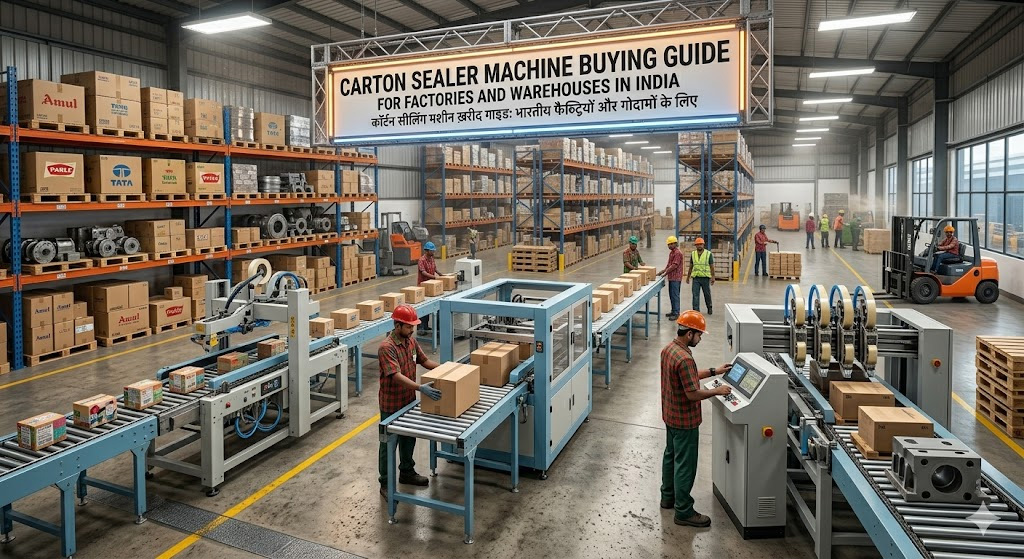
For higher-volume operations, the carton sealer can be connected with roller conveyors or belt conveyors to improve movement before and after sealing.
Why Manual Carton Taping Creates Problems
Manual taping looks simple, but it creates many hidden issues in daily operations.
The biggest issue is inconsistency.
One worker may apply tape properly. Another worker may apply less tape. During peak dispatch time, workers may rush the job. Some cartons may look clean, while others may have uneven taping.
Manual taping also consumes labour time. Workers who could be used for inspection, packing coordination or dispatch planning are used for repetitive taping work.
Manual sealing can also create dispatch risk. Weakly taped cartons may open during movement, stacking or transportation.
For growing businesses, manual carton taping becomes a bottleneck.
How a Carton Sealer Machine Improves Packaging
A carton sealer machine improves carton sealing by making the process faster and more consistent.
It reduces manual taping effort.
It improves carton appearance.
It helps maintain sealing uniformity.
It supports faster dispatch.
It reduces labour dependency.
It improves packaging flow.
It reduces chances of weak carton closure.
It can be connected with conveyors for better line movement.
For businesses handling regular carton dispatch, carton sealing automation can improve daily productivity.
When Should You Buy a Carton Sealer Machine?
A carton sealer machine becomes useful when carton sealing is slowing down your dispatch process.
You should consider buying one if:
Your team tapes many cartons daily.
Manual taping is taking too much time.
Cartons are opening during transport.
Packaging appearance is inconsistent.
You want to reduce labour dependency.
Dispatch delays happen during peak orders.
Your carton sizes are regular or manageable by machine.
You want to connect sealing with strapping or conveyor movement.
You supply distributors, retailers, e-commerce buyers or export customers.
For many small and medium businesses, a carton sealer is the first step toward packaging automation.
Industries That Need Carton Sealer Machines
E-Commerce and Logistics
E-commerce warehouses handle large volumes of parcels and cartons.
Manual taping slows down order dispatch and creates inconsistency. A carton sealer helps improve speed and packaging presentation.
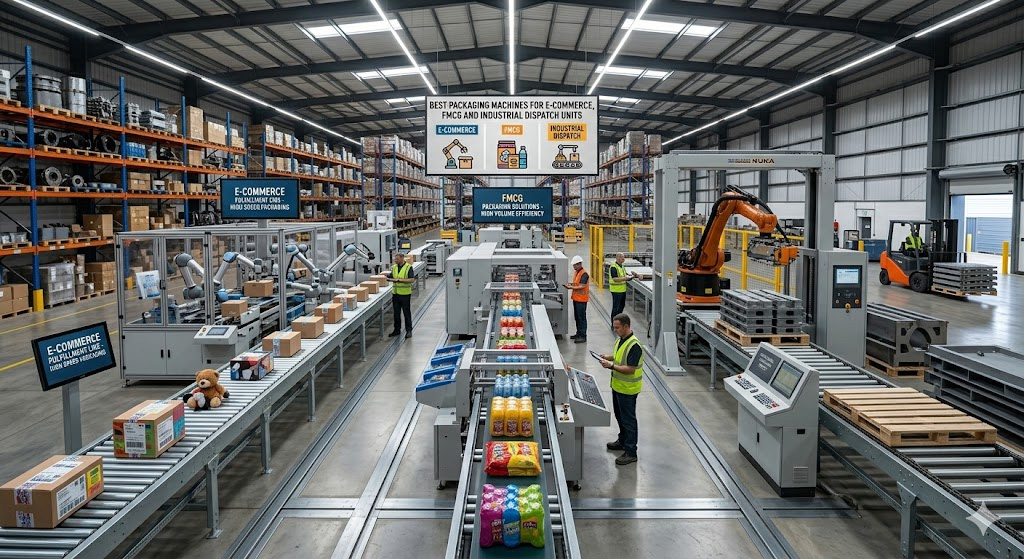
Useful supporting equipment includes roller conveyors, strapping machines, belt conveyors, pallet trucks and stretch wrapping machines.
FMCG Companies
FMCG companies dispatch cartons to distributors, retailers, supermarkets and warehouses.
Carton sealing needs to be fast and reliable. A carton sealer machine helps maintain consistent box closure and supports high-volume dispatch.
FMCG units may also use shrink packing machines, strapping machines, stretch wrapping machines and conveyors.
Food Processing Units
Food products may be packed in cartons after primary packaging.
A carton sealer helps close these cartons consistently before storage or dispatch. Food companies may also need bag sealing machines, shrink packing machines and conveyors.
Pharmaceutical Dispatch Centres
Pharmaceutical cartons need clean, controlled and consistent packaging.
Manual taping can create variation. A carton sealer helps maintain better sealing quality and a more organised dispatch process.
Pharma units may also use roller conveyors, stretch wrapping machines, pallet trucks and stackers.
Garment and Textile Units
Garment exporters and textile suppliers dispatch bulk cartons regularly.
Carton sealers help reduce manual taping effort and improve dispatch speed.
Strapping machines may also be used for additional carton security.
Electrical and Appliance Manufacturers
Electrical goods and appliances often require strong carton sealing because the products may be heavy or delicate.
Carton sealers help close boxes uniformly, while strapping machines and stretch wrapping machines can provide extra dispatch security.
Engineering Goods Suppliers
Engineering goods may be heavier and require stronger packaging.
A carton sealer helps close boxes, but strapping and material handling equipment may also be required for safe movement.
Types of Carton Sealing Requirements
Different businesses have different carton sealing needs.
Some companies use standard-size cartons every day.
Some handle different carton sizes.
Some seal very large cartons.
Some seal small boxes.
Some need edge sealing.
Some need flap closing support.
Some need sealing before strapping.
Some need carton sealing as part of a conveyor line.
Before buying a carton sealer, the buyer should understand the exact sealing requirement.
Regular Carton Sealing
Regular carton sealing is suitable when carton sizes are mostly fixed or similar.
This is common in FMCG, food, pharma, garments and general manufacturing.
A regular carton sealer can help improve speed and consistency where carton dimensions remain predictable.
Random Carton Sealing
Random carton sealing is useful when carton sizes vary frequently.
E-commerce warehouses and distribution centres may handle different carton sizes throughout the day.
In such cases, buyers should discuss whether a random or adjustable carton sealing solution is required.
Large Carton Sealing
Large cartons are used for appliances, industrial goods, electronics, bulky products and export shipments.
Large carton sealing requires machine suitability based on carton size, weight and handling method.
Small Carton Sealing
Small cartons require controlled movement and proper sealing alignment.
Small carton sealing applications are common in pharma, electronics, spare parts, cosmetics and small consumer goods.
Edge Sealing
Edge sealing is used when cartons require additional sealing support along the edges.
This may be useful for cartons that need stronger closure or better protection during shipping.
Auto Flap Closing
Some operations require automatic flap closing before tape application.
This is useful when labour reduction and higher automation are required.
How to Choose the Right Carton Sealer Machine
Check Carton Size
Carton size is the first selection factor.
The buyer should measure carton length, width and height.
If carton sizes vary, mention the minimum and maximum sizes.
A carton sealer must be suitable for the actual carton dimensions used in daily operations.
Check Carton Weight
Carton weight affects movement, conveyor selection and machine handling.
Heavy cartons may require stronger support, better conveyors and additional strapping after sealing.
Always share maximum carton weight with the supplier.
Check Daily Carton Volume
Daily carton volume decides the level of automation.
A small business may need a basic carton sealer.
A medium-volume warehouse may need a carton sealer with conveyor support.
A high-volume dispatch unit may need a more automated carton sealing line.
Important details include cartons per hour, cartons per shift and peak season volume.
Check Carton Size Variation
If all cartons are the same size, machine selection is simpler.
If carton sizes change frequently, the buyer may need an adjustable or random carton sealer.
This is especially important for e-commerce, logistics and distribution operations.
Check Tape Requirement
Tape width and tape quality matter in carton sealing.
The buyer should confirm which tape size is suitable and whether the tape is easily available.
Good machine performance also depends on using proper consumables.
Check Space Availability
A carton sealer needs space for feeding and exit.
If conveyors are used, additional space is required.
Before buying, check machine placement, operator movement, carton flow and maintenance access.
A good layout prevents congestion around the packing area.
Check Conveyor Integration
For better productivity, carton sealers can be connected with conveyors.
A roller conveyor before the machine helps feed cartons.
A roller conveyor after the machine helps move sealed cartons toward strapping, inspection or dispatch.
Conveyor integration is useful for medium and high-volume operations.
Check Future Expansion
A business may start with a carton sealer but later add strapping machines, conveyors or stretch wrapping machines.
Buyers should consider whether the machine can fit into future packaging-line planning.
Carton Sealer with Strapping Machine
Many businesses need both carton sealing and strapping.
The carton sealer closes the box.
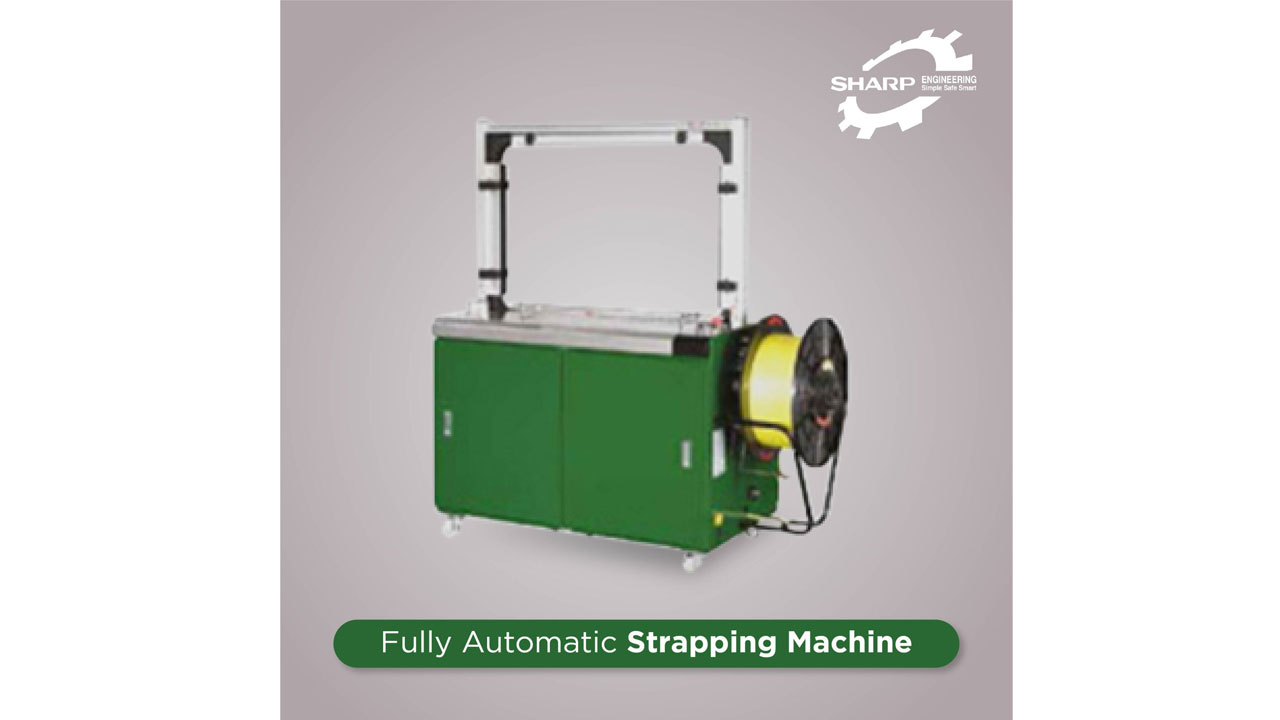
The strapping machine adds external security.
This combination is useful for heavy cartons, long-distance dispatch, export packaging, industrial goods and warehouse movement.
A practical line may include:
Packing table
Carton sealer
Roller conveyor
Strapping machine
Dispatch conveyor
Palletising area
This improves carton strength and movement flow.
Carton Sealer with Conveyor System
A carton sealer gives better results when cartons move smoothly before and after sealing.
A conveyor-supported sealing line reduces manual carrying and increases output.
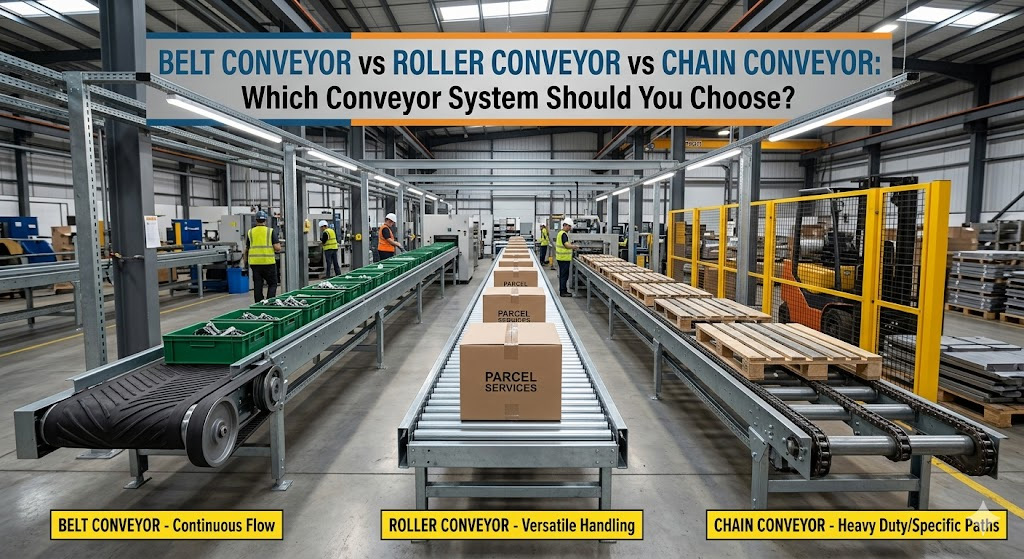
Roller conveyors are commonly used for cartons because boxes have flat bases.
Belt conveyors may be used where product movement before carton sealing requires continuous support.
A carton sealer with conveyors is useful for e-commerce, FMCG, pharma, logistics and manufacturing units.
Carton Sealer with Stretch Wrapping Machine
After cartons are sealed and strapped, they may be stacked on pallets.
A stretch wrapping machine secures the pallet load with film.
This combination is useful for bulk dispatch, warehouse storage and export shipments.
A practical flow may include:
Carton sealing
Strapping
Palletising
Stretch wrapping
Pallet truck movement
Dispatch
This helps protect goods during long-distance shipping.
Carton Sealer with Material Handling Equipment
After sealing, cartons need to move safely.
Material handling equipment improves movement after packaging.
Useful equipment includes:
Pallet trucks for pallet movement
Stackers for lifting and storage
Trolleys for small load movement
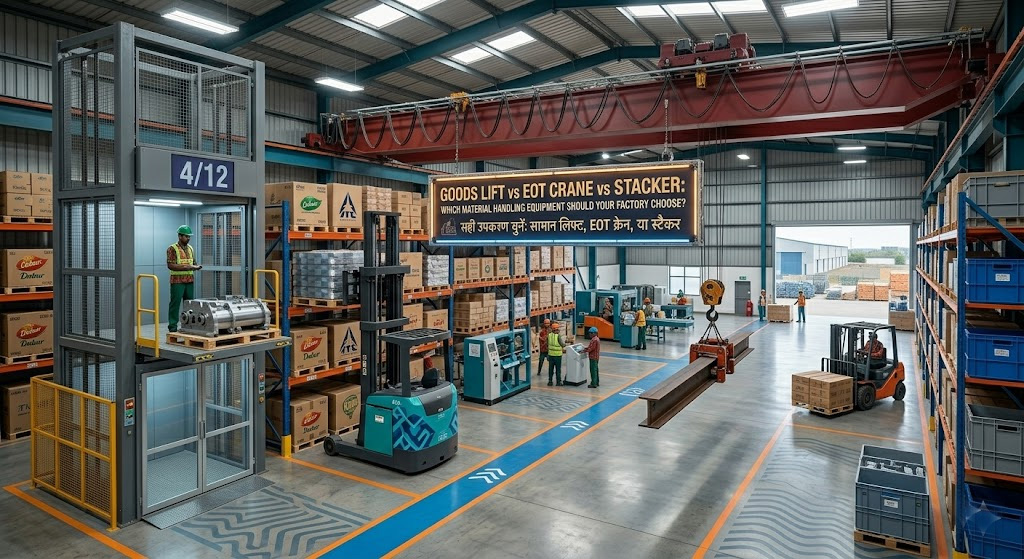
Goods lifts for floor-to-floor movement
EOT cranes for heavy industrial goods
Carton sealing should be planned along with movement and dispatch.
Local Mumbai Demand for Carton Sealer Machines
Mumbai and Maharashtra have strong demand for carton sealer machines because of manufacturing, e-commerce, logistics, pharma, FMCG, packaging, garments and industrial goods activity.
Businesses in Andheri, Thane, Navi Mumbai, Bhiwandi, Vasai, Taloja, Pune, Nashik and Aurangabad often need carton sealers for regular dispatch.
Local buyers usually look for:
Carton sealer machine supplier in Mumbai
Carton sealing machine for warehouse
Carton sealer for FMCG cartons
Carton sealer for e-commerce parcels
Carton sealing machine for export cartons
Carton sealer with conveyor
Carton sealer with strapping machine
Sharp Engineering’s Mumbai base makes it relevant for local buyers who want to discuss carton size, packaging volume, layout and machine selection.
Pan India Demand for Carton Sealer Machines
Across India, carton sealer machines are required by factories and warehouses in Delhi NCR, Gujarat, South India, East India and Central India.
Delhi NCR buyers may need carton sealers for e-commerce, logistics, auto components, garments and manufacturing.
Gujarat buyers may need carton sealers for pharma, chemicals, food, textiles, plastics and export units.
South India buyers may need carton sealers for electronics, automotive, FMCG, pharma, engineering and food processing.
East India buyers may need carton sealers for warehouses, distribution centres and manufacturing units.
For Pan India buyers, carton sealer selection should be based on carton size, daily volume and dispatch process.
Export Buyer Demand for Carton Sealer Machines
Export buyers and importers also look for carton sealing machines from India because carton sealing is a common requirement in almost every industry.
A carton sealer can be useful for overseas factories, distributors, warehouses and packaging units.
For export markets, carton sealers can be supplied as part of a broader packaging machine portfolio along with strapping machines, shrink packing machines, stretch wrapping machines, conveyors and material handling equipment.
Benefits of a Carton Sealer Machine
A carton sealer gives several practical benefits.
It improves carton sealing speed.
It reduces manual taping work.
It gives more consistent tape application.
It improves carton appearance.
It supports faster dispatch.
It reduces operator fatigue.
It helps reduce weak carton closure.
It can connect with strapping machines and conveyors.
It supports domestic and export packaging.
For businesses handling regular carton dispatch, these benefits can directly improve productivity.
Common Mistakes Buyers Should Avoid
Do not buy a carton sealer without checking carton size.
Do not ignore carton weight.
Do not assume one machine suits all carton types.
Do not buy only by price.
Do not ignore conveyor integration.
Do not place the machine far from the packing area.
Do not forget future packaging-line expansion.
Do not ignore tape quality.
Do not expect a carton sealer to replace strapping where extra strength is required.
A carton sealer closes the box. If the carton also needs reinforcement, use a strapping machine after sealing.
Questions to Ask Before Buying a Carton Sealer
Before buying, ask:
What carton sizes can the machine handle?
Is it suitable for fixed or variable carton sizes?
Can it seal top and bottom?
Does it need manual flap closing?
Can conveyors be added?
What tape width is required?
How many cartons can it seal per hour?
Is it suitable for my carton weight?
How much space is required?
Can it connect with a strapping machine?
What maintenance is needed?
Which industries is it suitable for?
These questions help buyers choose the right machine.
Why Choose Sharp Engineering
Sharp Engineering offers packaging machines, conveyor systems and material handling equipment for factories, warehouses and dispatch units.
For carton sealing requirements, buyers can discuss not only the carton sealer machine but also the full packaging flow.
A buyer may need a carton sealer with roller conveyors.
Another buyer may need carton sealing followed by strapping.
Another may need carton sealing, palletising and stretch wrapping.
Another may need material handling equipment after carton packing.
This complete approach makes Sharp Engineering suitable for local Mumbai buyers, Pan India industrial buyers and export customers.
Final Advice for Buyers
A carton sealer machine is one of the most practical machines for improving packaging productivity.
If your team is manually taping cartons every day, there is a good chance you are losing time, labour and consistency.
Start by checking your carton size, carton weight, daily volume and dispatch process.
If carton sealing is your bottleneck, a carton sealer machine can improve speed and reduce manual work.
If cartons also need extra security, add a strapping machine.
If movement is slow, add conveyors.
If cartons are palletised, add stretch wrapping and pallet handling equipment.
Sharp Engineering can help buyers choose the right carton sealing solution based on carton size, packaging volume, factory layout and dispatch requirement.
Call to Action
Looking for a carton sealer machine for your factory or warehouse?
Share your carton size, carton weight, daily carton volume, carton type, factory location and dispatch process with Sharp Engineering. The team can suggest the right carton sealer machine, conveyor support, strapping machine or complete packaging line based on your requirement.
FAQs
What is a carton sealer machine?
A carton sealer machine is used to close and tape carton boxes faster and more consistently than manual taping.
Why should I use a carton sealer machine?
You should use a carton sealer machine to reduce manual taping, improve sealing consistency, speed up dispatch and improve carton appearance.
Which industries use carton sealer machines?
E-commerce, FMCG, food, pharma, logistics, garments, electrical goods, appliances, engineering goods and general manufacturing industries use carton sealer machines.
Can a carton sealer machine reduce labour cost?
Yes. A carton sealer reduces manual taping work and helps workers handle more cartons in less time.
Can a carton sealer prevent cartons from opening?
A carton sealer improves tape application and reduces weak sealing. For heavier cartons, strapping may also be required.
Do I need a strapping machine after carton sealing?
You may need a strapping machine if cartons are heavy, shipped long distances, exported or require extra security.
Can carton sealers be used with conveyors?
Yes. Carton sealers can be connected with roller conveyors or belt conveyors for better carton movement.
Which conveyor is best for carton sealer lines?
Roller conveyors are commonly used with carton sealer machines because cartons usually have flat bases.
What carton details are needed before buying a carton sealer?
You should share carton length, width, height, weight, daily carton volume and whether carton sizes are fixed or variable.
Is a carton sealer useful for e-commerce warehouses?
Yes. E-commerce warehouses use carton sealers to improve parcel packing speed and reduce manual taping.
Is a carton sealer useful for FMCG companies?
Yes. FMCG companies use carton sealers for faster and more consistent carton dispatch.
Is a carton sealer useful for export packaging?
Yes. Export cartons need reliable sealing, and a carton sealer helps improve carton closure quality before strapping or palletising.
Can one carton sealer handle different carton sizes?
Some carton sealers are suitable for adjustable or variable carton sizes. Buyers should share minimum and maximum carton dimensions before selection.
What is the difference between carton sealing and strapping?
Carton sealing closes the box with tape, while strapping secures the carton or bundle with strap for extra strength.
Why choose Sharp Engineering for carton sealer machines?
Sharp Engineering offers carton sealer machines along with packaging machines, conveyors and material handling equipment for complete packaging and dispatch support.