In many manufacturing plants, production speed is no longer the main problem. The real delay often starts after the product is ready.
Cartons wait for sealing. Operators manually strap boxes. Workers move loads from one table to another. Pallets are wrapped by hand. Finished goods stand near the dispatch area because the final packaging process is not moving at the same speed as production.
This is where packaging automation becomes important.
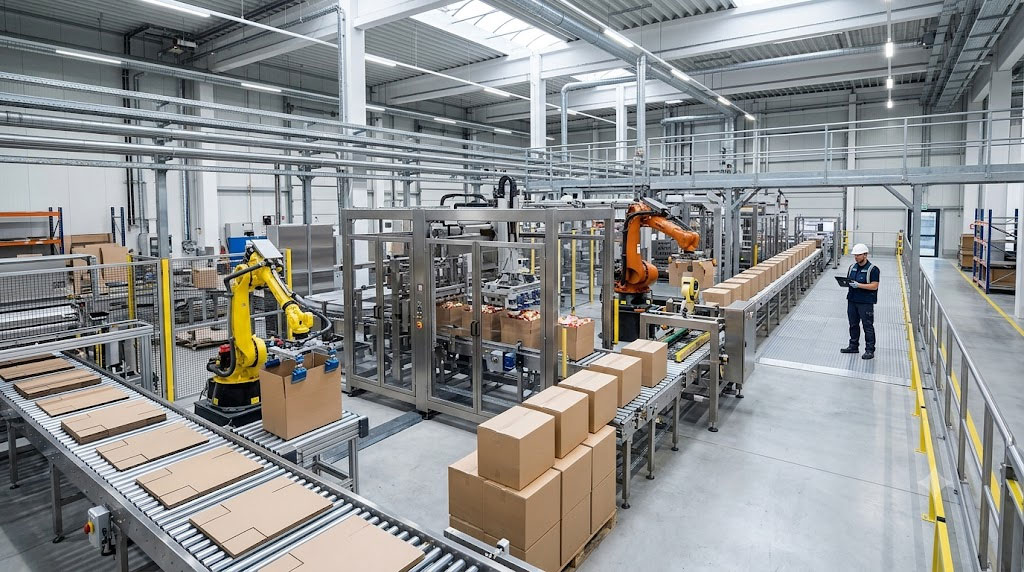
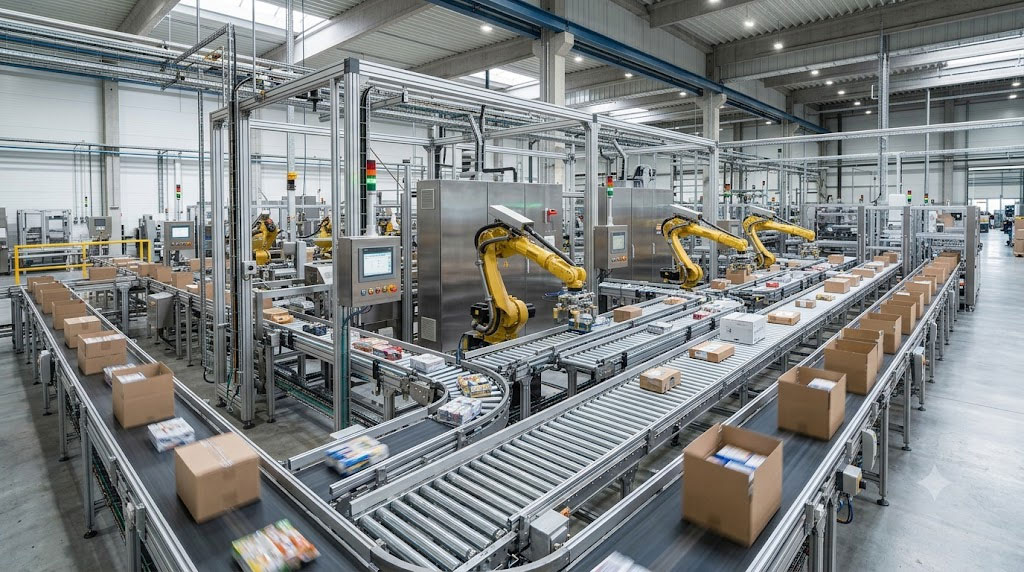
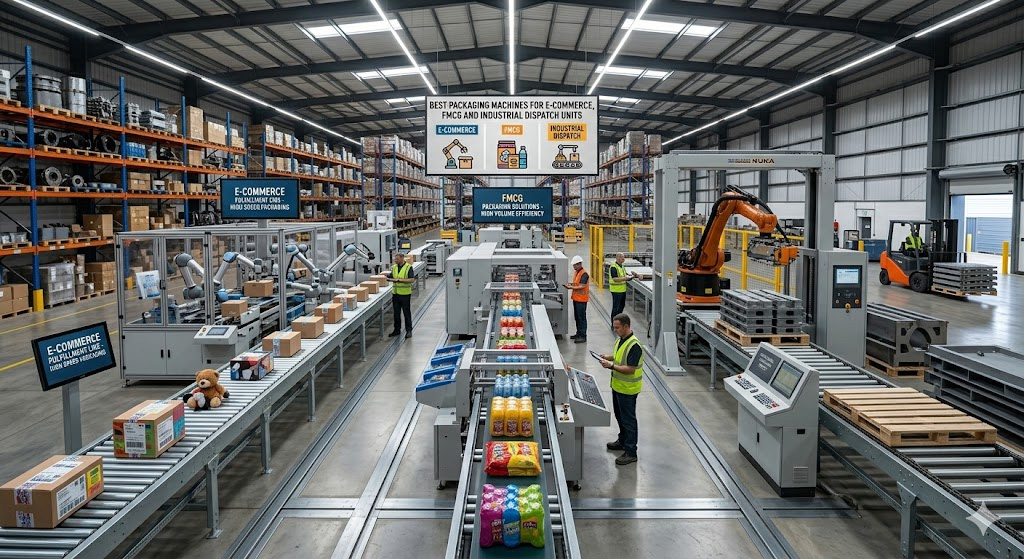
Packaging automation is not only about buying one machine. It is about creating a smoother flow from product packing to carton sealing, strapping, wrapping, conveying, lifting, pallet movement and final dispatch. For Indian manufacturing plants, this can directly improve productivity, reduce labour dependency, minimise handling damage and support faster order fulfilment.
Sharp Engineering supports this requirement with a product ecosystem covering Packaging Machines, Material Handling Equipment, Belt Conveyors, Chain Conveyors and Roller Conveyors. Their packaging machine range includes equipment for strapping, sealing, wrapping and shrink packing, while their broader product range includes Hand Pallet Trucks, Stackers, Trolleys, AGV, Goods Lifts, EOT Cranes and Conveyor Systems. (Sharp Engineering India)
What Is Packaging Automation?
Packaging automation means using machines and systems to reduce manual work in the packaging and dispatch process.
In a factory, this may include:
Carton sealing
Strapping
Bag sealing
Shrink packing
Stretch wrapping
Product movement through conveyors
Pallet movement
Vertical lifting
Warehouse handling
Final dispatch preparation
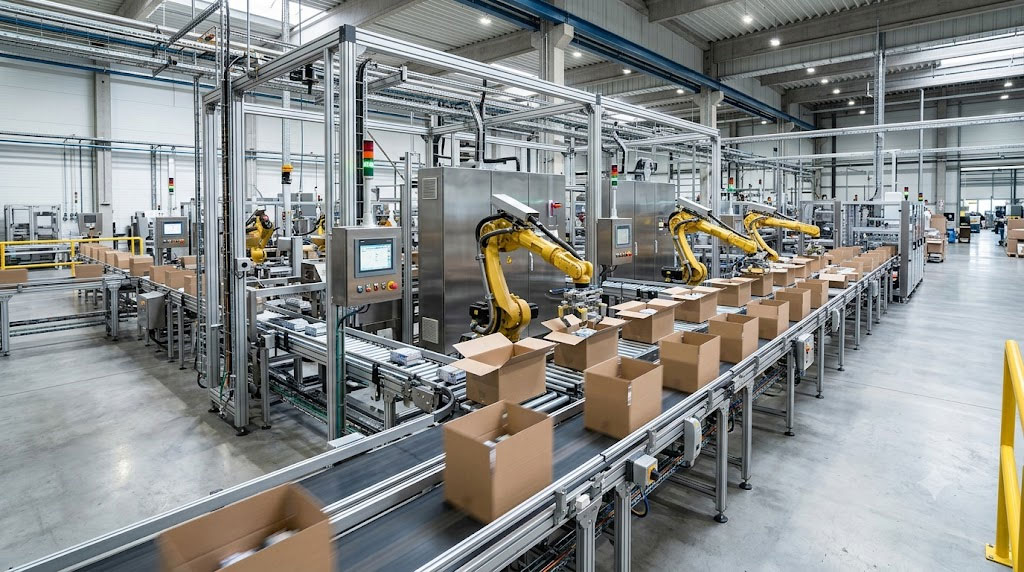
A small factory may automate only one stage, such as carton sealing or strapping. A medium-size plant may add conveyors and pallet handling equipment. A large manufacturing unit may create a complete end-of-line automation system where products move from packing to sealing, strapping, wrapping and dispatch with minimum manual interruption.
The purpose of packaging automation is simple: faster packing, better consistency and safer movement.
Why Indian Manufacturing Plants Need Packaging Automation
Many Indian factories still depend heavily on manual packaging. This works when production volume is low. But once orders increase, manual packaging creates bottlenecks.
Common problems include slow carton taping, uneven strapping, product damage, excess labour dependency, inconsistent wrapping, poor material flow and dispatch delays.
These issues affect both cost and customer experience.
If a buyer receives damaged goods, weak carton sealing or unstable pallet loads, the supplier’s brand image suffers. For export buyers, packaging quality becomes even more critical because goods pass through longer transport cycles, multiple handling points and container movement.
Packaging automation helps manufacturers create stronger, cleaner and more predictable dispatch operations.
Where Packaging Automation Starts in a Factory
Packaging automation should start with a simple question:
Where is the maximum delay happening?
For some factories, the issue is carton sealing. For others, it is strapping. In some units, packed goods are ready but movement to dispatch is slow. In warehouse-heavy operations, the biggest problem may be pallet movement or lifting.
Before buying machines, the factory should study the complete packaging flow.
Product comes from production
Product goes to primary packing
Carton or bag is prepared
Carton is sealed
Carton is strapped
Goods are shifted
Pallet is wrapped
Material is stored or dispatched
Once this flow is mapped, the right automation requirement becomes clear.
Carton Sealing Automation
Carton sealing is one of the most common packaging bottlenecks.
When workers manually tape cartons, the process becomes slow and inconsistent. Some cartons may be sealed properly, while others may have weak tape placement. During high-volume dispatch, this can affect speed and packing quality.
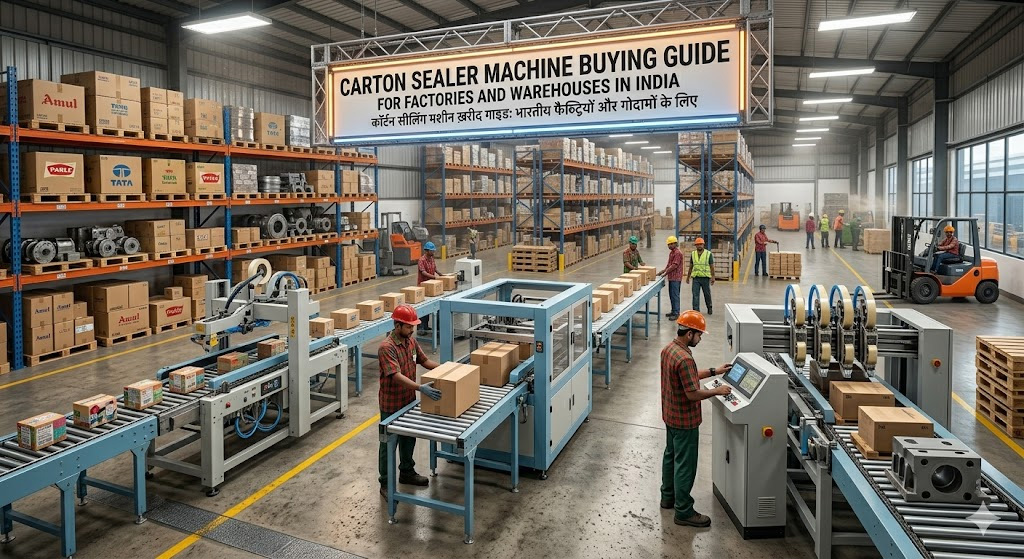
A carton sealer machine helps close and seal boxes faster and more uniformly.
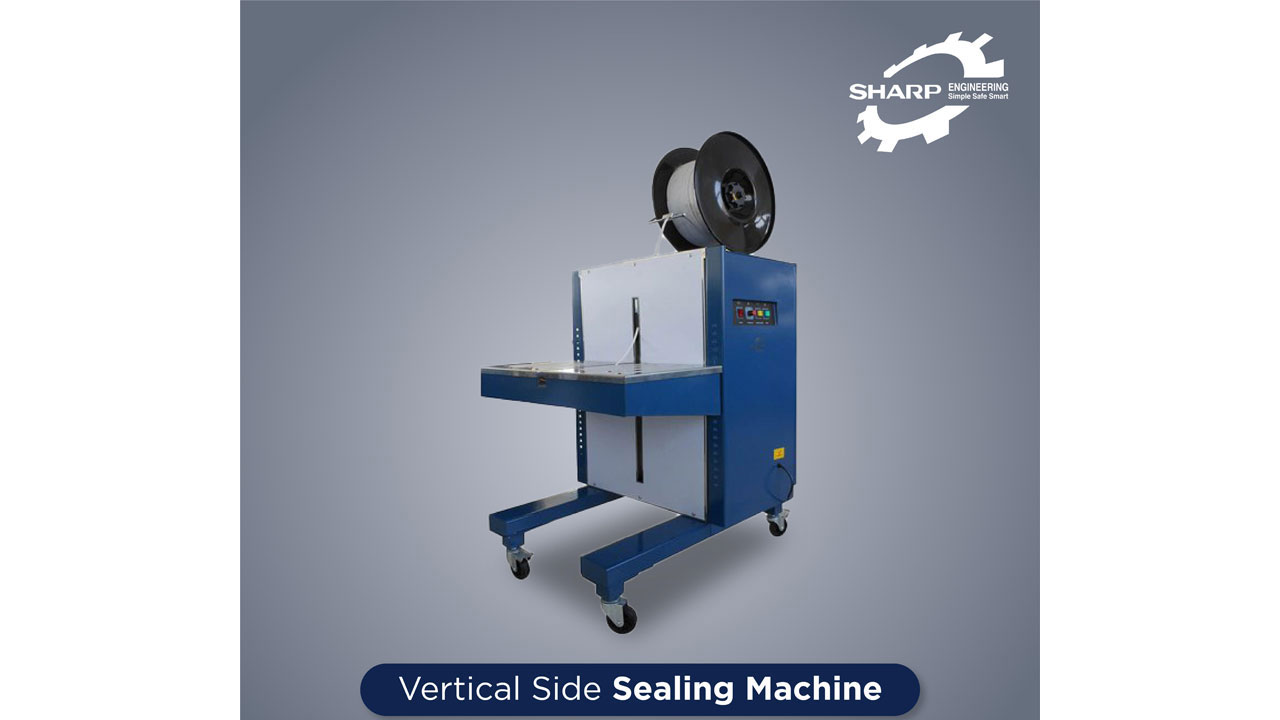
Sharp Engineering offers a wide range of carton sealer machines, including machines for regular cartons, large cartons, small cartons, very small cartons, LED TV cartons, edge sealing and auto flap closing applications. (Sharp Engineering India)
Carton sealing automation is useful for industries such as FMCG, food products, pharma, e-commerce, logistics, electrical goods, garments, plastic products and industrial components.
For factories handling standard carton sizes, a regular carton sealer can be suitable. For businesses handling different carton sizes, a random carton sealer or adjustable solution may be more practical.
Strapping Automation
After carton sealing, strapping is often required to secure the box, bundle or package.
Manual strapping can be slow, tiring and inconsistent. If the strap is too loose, the package may open or shift. If the strap is too tight, it may damage the carton or product.
A strapping machine improves strap tension, packing speed and package security.
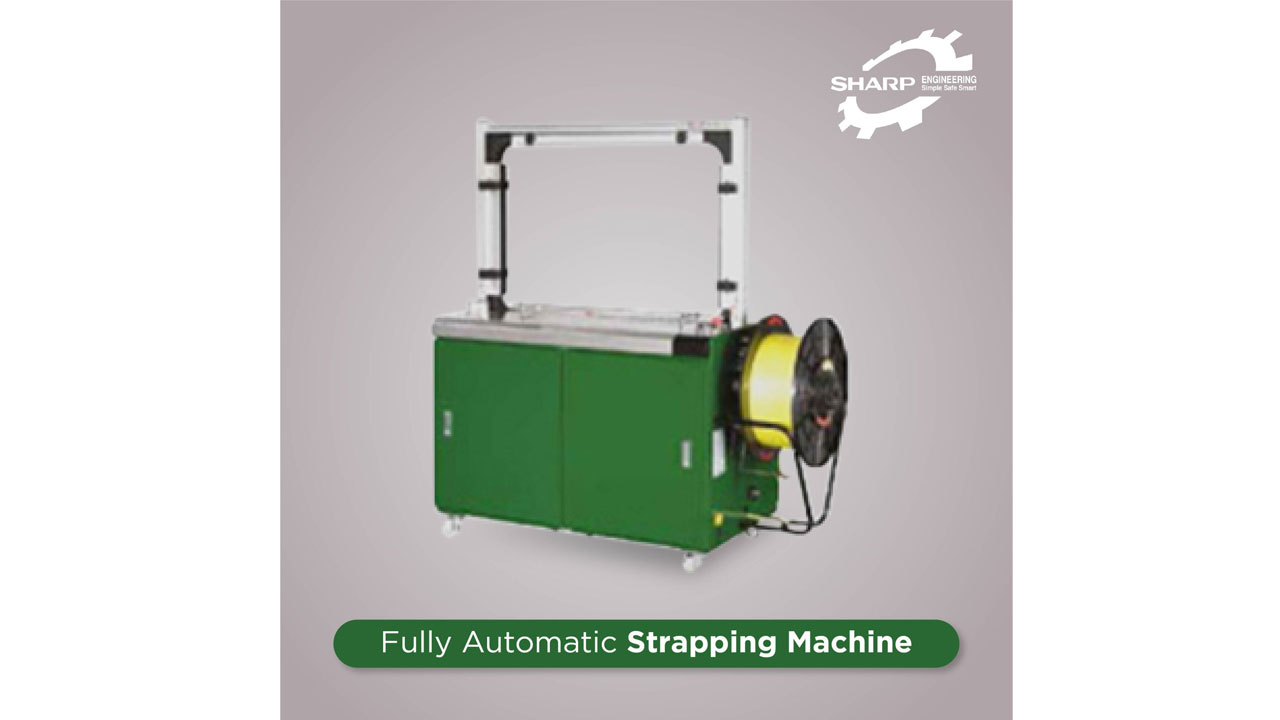
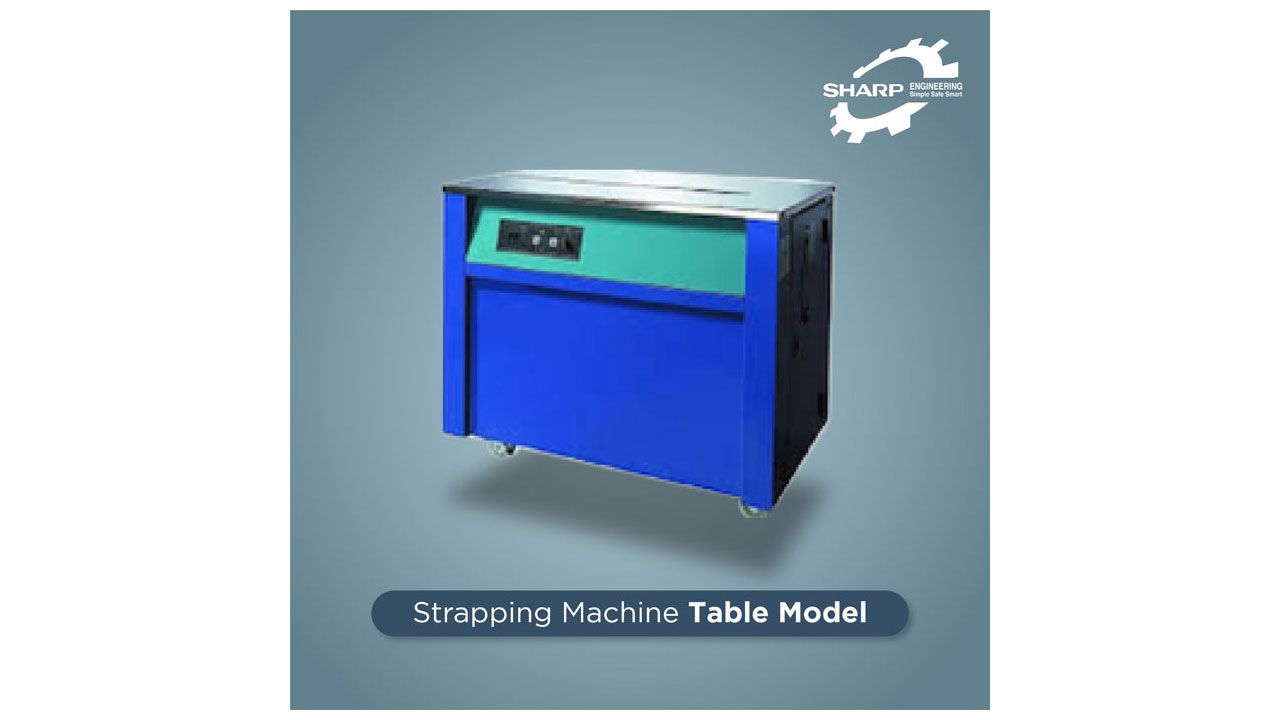
Sharp Engineering’s packaging range includes Fully Auto Strapping Machines, Semi Auto Strapping Machines, Strapping Hand Tools and PP Strap Rolls, making it suitable for different packaging volumes and operational needs. (Sharp Engineering India)
A semi-auto strapping machine is suitable for smaller factories, warehouses and medium-volume packing lines. A fully auto strapping machine is better for high-volume operations where speed and consistency are important.
Industries using cartons, bundles, printed material, engineering goods, appliances, plastic products, textiles, logistics parcels and export packages can benefit from strapping automation.
Shrink Packing Automation
Shrink packing is used when products need better protection, grouping or presentation.
In this process, a shrink film covers the product and heat is used to shrink the film around it. This gives a neat, protective pack.
Sharp Engineering’s shrink packing machine range is used for packing goods with heat shrink films, and the website mentions suitability for applications such as gifts, confectionery, bottles and cosmetics. (Sharp Engineering India)
Shrink packing automation is useful where the final pack must look clean and professional. It is widely relevant for retail products, FMCG, bottles, boxes, stationery, cosmetics, food packs, printed products and grouped items.
For businesses where product appearance matters, shrink packing adds value beyond protection. It improves shelf appeal and handling convenience.
L Sealer Automation
An L sealer is commonly used before shrink wrapping. It seals the film around the product so that the product can pass through the shrink tunnel or heat shrinking process.
This machine is useful for products such as boxes, books, retail packs, stationery items, gift packs, cosmetics, pharmaceutical packs and product bundles.
For manufacturers looking to improve product presentation, an L sealer with shrink packing can be an effective automation step.
It reduces manual film cutting and gives cleaner sealing around the product.
Bag Sealing Automation
Not every product is packed in a carton. Many products are packed in bags, packets or pouches.
Bag sealing machines are used to seal bags securely so the product remains protected during storage and movement.
Bag sealing automation is useful for food products, powders, granules, chemicals, spare parts, hardware, agricultural products, plastic components, pharmaceutical materials and industrial supplies.
A proper bag sealing machine helps reduce leakage, spillage, contamination and weak closure issues.
Factories should choose the machine based on bag material, bag thickness, product type, production speed and sealing strength requirement.
Stretch Wrapping Automation for Pallets
Once cartons or products are placed on pallets, they need to be secured properly.
Manual pallet wrapping is time-consuming and inconsistent. Some pallets may be wrapped tightly, while others may remain loose. During transportation, unstable pallet loads can shift, tilt or get damaged.
A stretch wrapping machine applies stretch film around the pallet load in a controlled and consistent way.
Sharp Engineering offers stretch wrapping machines for handling carton boxes containing pharmaceutical products, light and heavy engineering goods, electrical and home appliances, tins containing fruit pulp, paint, liquids and lubricants. Their range includes pallet stretch wrapping machines, roll stretch wrapping machines, box/carton wrapping machines, top press machines and luggage wrapping machines. (Sharp Engineering India)
Stretch wrapping automation is especially useful for exporters, warehouses, logistics companies, manufacturing plants and distribution centres.
Conveyor Automation in Packaging Lines
Conveyors are important when a factory wants to connect different packaging stages.
Without conveyors, workers manually lift and move products from one table to another. This slows down the line and increases fatigue.
A conveyor system helps products move from packing to sealing, strapping, coding, inspection, wrapping and dispatch.
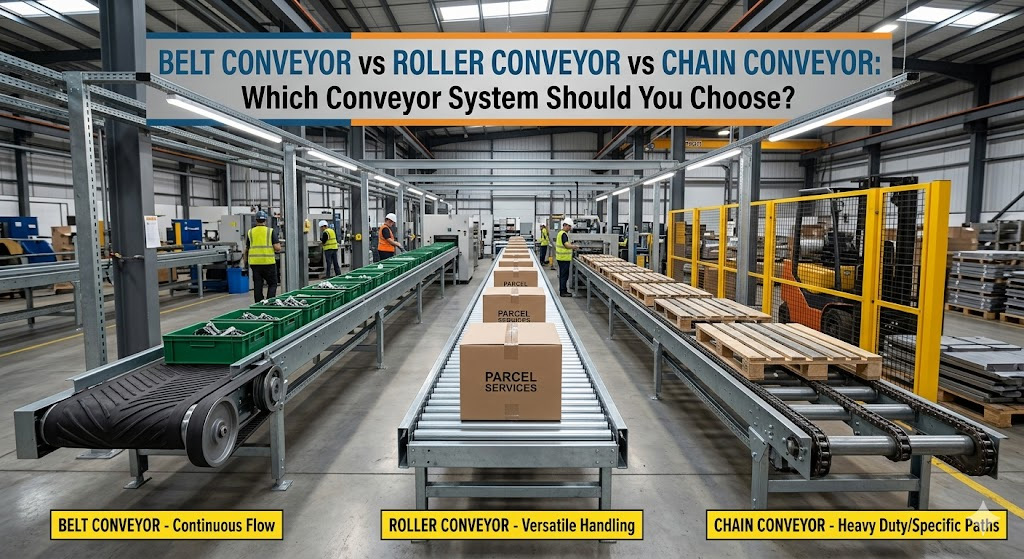
Sharp Engineering’s product range includes Belt Conveyors, Chain Conveyors and Roller Conveyors, including horizontal conveyors, coding conveyors, inclined belt conveyors and truck loader conveyors. (Sharp Engineering India)
Conveyors are not only for large factories. Even medium-size plants can use conveyors to reduce handling time and create a cleaner workflow.
A belt conveyor is useful for cartons, bags, packets and lightweight to medium-weight goods.
A roller conveyor is useful for cartons and boxes.
A chain conveyor is suitable where stronger movement support is required.
An inclined conveyor helps move material between height levels.
A truck loader conveyor can support loading and dispatch operations.
Material Handling Automation After Packaging
Packaging automation does not stop after sealing or wrapping.
Once goods are packed, they need to move safely inside the factory or warehouse. This is where material handling equipment becomes important.
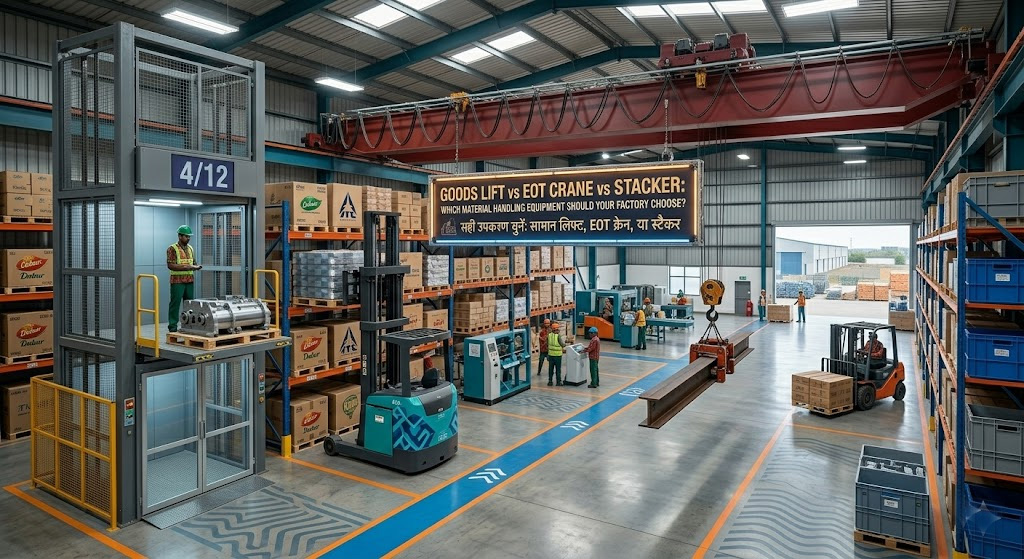
Sharp Engineering’s range includes Hand Pallet Trucks, Stackers, Trolleys, AGV, Goods Lifts and EOT Cranes. (Sharp Engineering India)
A hand pallet truck is useful for moving pallet loads across the warehouse.
A stacker helps lift and stack materials.
A trolley helps move smaller loads.
A goods lift supports vertical movement between floors.
An AGV can support automated internal movement in suitable layouts.
An EOT crane is useful for heavier industrial handling needs.
When material handling is planned with packaging automation, the complete dispatch process becomes faster and safer.
Packaging Automation for Different Industries
Different industries need different automation combinations.
FMCG Manufacturing Plants
FMCG plants need speed, neat packing and consistent dispatch.
Useful machines may include carton sealers, shrink packing machines, L sealers, conveyors, strapping machines and stretch wrapping machines.
These machines help manage high-volume carton movement, retail-ready packs and palletised dispatch.
Food and Beverage Units
Food and beverage companies often need bag sealing, shrink packing, carton sealing and pallet wrapping.
Packaging automation helps improve hygiene, handling, consistency and dispatch speed.
For bottle packs, shrink packing and stretch wrapping may be especially useful.
Pharmaceutical and Healthcare Product Manufacturers
Pharmaceutical dispatch needs clean packing, safe handling and proper carton protection.
Carton sealing machines, shrink packing machines, stretch wrapping machines, conveyors and pallet handling equipment can help maintain better control in the final packing area.
Engineering Goods Manufacturers
Engineering goods may be heavy, irregular or damage-sensitive.
Such factories may need strapping machines, stretch wrapping machines, hand pallet trucks, stackers, goods lifts, EOT cranes and conveyors.
The focus should be on load safety and movement efficiency.
E-Commerce and Logistics Warehouses
E-commerce and logistics operations need fast packing and dispatch.
Carton sealers, strapping machines, roller conveyors, belt conveyors, pallet trucks and stretch wrapping machines can improve throughput.
For high-volume parcel movement, conveyor integration becomes very useful.
Export-Oriented Manufacturing Units
Export packaging must be stronger because products travel longer distances.
Export-focused factories may need carton sealing, strapping, stretch wrapping, conveyors and pallet handling equipment.
Good final packaging reduces transit damage and improves buyer confidence.
How to Plan Packaging Automation Step by Step
A factory does not always need to automate everything at once.
The best approach is to identify the biggest bottleneck and solve it first.
Start with Current Process Study
Look at your existing packaging flow.
How many operators are involved?
How many cartons are packed per hour?
Where does material wait?
Which stage creates rework?
Where does damage happen?
Which process depends too much on manual labour?
This study helps identify the first automation requirement.
Select the First Machine Based on Bottleneck
If taping is slow, start with a carton sealer.
If carton security is weak, start with a strapping machine.
If pallet loads are unstable, start with a stretch wrapping machine.
If material movement is slow, start with conveyors or pallet handling equipment.
The first machine should solve the most visible and costly problem.
Plan Machine Integration
After adding one machine, think about the next stage.
For example, a carton sealer can be connected with a strapping machine. A strapping machine can be connected with a conveyor. A conveyor can move cartons toward palletising or dispatch. A stretch wrapping machine can secure pallet loads.
This creates a step-by-step automation journey.
Train Operators Properly
Packaging automation works best when operators understand the machine.
They should know how to use controls, load materials, adjust settings, identify minor issues and follow safety practices.
Proper operator training reduces breakdowns, misuse and downtime.
Maintain Machines Regularly
Machines should be cleaned, checked and serviced regularly.
Dust, strap particles, film residue and carton debris can affect performance. Routine maintenance helps maintain speed and machine life.
A poorly maintained machine can again become a bottleneck.
Mistakes to Avoid While Buying Packaging Machines
Many factories make the mistake of buying based only on price.
Low initial cost may become expensive later if the machine is slow, unsuitable or difficult to maintain.
Another mistake is buying a machine without checking actual product size and weight.
Some factories also ignore future volume. A machine suitable for today may become too small after one year.
Another common mistake is buying machines separately without thinking about line flow. A carton sealer, strapping machine and conveyor should work together, not as disconnected equipment.
The best buying decision is based on application, volume, layout, operator use, service support and future growth.
What Details Should You Share with Sharp Engineering?
To get the right recommendation, buyers should share clear technical and operational details.
Product type
Carton or bag size
Package weight
Daily packaging volume
Current manual process
Available floor space
Dispatch method
Pallet size, if applicable
Load height, if applicable
Required speed
Industry type
Future expansion plan
These details help the supplier suggest a suitable machine or combination.
For example, an FMCG plant may need carton sealing and shrink packing. A warehouse may need conveyors and stretch wrapping. An engineering unit may need strapping, pallet trucks and stackers.
Why Sharp Engineering Is Suitable for Packaging Automation Projects
Sharp Engineering has more than 25 years of industrial experience and a strong foothold in packaging machines, material handling equipment, conveyor systems manufacturing and allied industries. (Sharp Engineering India)
The company’s strength is not limited to one machine category. It covers packaging machines, conveyors and material handling equipment, making it suitable for factories that want a practical end-of-line solution.
For manufacturing plants, this is important because packaging automation often requires more than one product.
A carton sealer may need a conveyor.
A strapping machine may need material movement support.
A stretch wrapping machine may need pallet handling.
A warehouse may need conveyors, stackers and pallet trucks.
Sharp Engineering’s product ecosystem helps buyers evaluate the complete packaging and movement process.
Final Advice for Manufacturing Plants
Packaging automation should not be treated as a luxury. For growing factories, it becomes a practical requirement.
If your team is spending too much time on manual carton sealing, strapping, wrapping, lifting or movement, automation can help reduce delays and improve dispatch quality.
The right automation plan does not need to start big. Start with the biggest problem. Add the machine that gives the fastest operational improvement. Then connect more stages as production grows.
Sharp Engineering can help manufacturing plants choose suitable packaging machines, conveyor systems and material handling equipment based on product type, packing volume, load movement and dispatch requirements.
Call to Action
Planning to automate your packaging or dispatch line?
Share your product details, carton size, daily packaging volume, pallet size, factory layout and current packaging challenges with Sharp Engineering. The team can suggest the right machine combination for sealing, strapping, shrink packing, stretch wrapping, conveying and material handling.
FAQs
What is packaging automation?
Packaging automation means using machines to reduce manual work in packing, sealing, strapping, wrapping, conveying and dispatch operations.
Why do manufacturing plants need packaging automation?
Manufacturing plants need packaging automation to improve speed, reduce labour dependency, minimise product damage and make dispatch more consistent.
Which machine should I buy first for packaging automation?
The first machine should solve your biggest bottleneck. If carton closing is slow, buy a carton sealer. If package security is weak, buy a strapping machine. If pallet wrapping is inconsistent, buy a stretch wrapping machine.
Is packaging automation suitable for small factories?
Yes. Small factories can start with semi-auto machines such as semi-auto strapping machines, carton sealers or bag sealing machines.
What is the role of a carton sealer machine?
A carton sealer machine closes and seals cartons faster and more consistently than manual taping.
What is the role of a strapping machine?
A strapping machine applies strap around boxes, cartons or bundles to secure them for handling, storage and transportation.
When should I use a shrink packing machine?
A shrink packing machine should be used when products need protective film covering, better appearance or grouped packaging.
What is the use of a stretch wrapping machine?
A stretch wrapping machine secures pallet loads with stretch film so goods remain stable during movement and transport.
Are conveyors required for packaging automation?
Conveyors are useful when products need to move smoothly between packing, sealing, strapping, wrapping and dispatch stages.
Which conveyor is best for carton movement?
Belt conveyors and roller conveyors are commonly used for carton movement, depending on carton weight, size and line design.
What material handling equipment is useful after packaging?
Hand pallet trucks, stackers, trolleys, goods lifts, AGVs and EOT cranes are useful for moving packed goods safely inside factories and warehouses.
Can packaging automation reduce labour cost?
Yes. Packaging automation reduces repetitive manual work and helps operators handle more output with better consistency.
Is packaging automation useful for export packaging?
Yes. Export packaging benefits from better carton sealing, strapping, pallet wrapping and material handling because export goods face longer transport and handling cycles.
How do I know which packaging machine is right for my product?
You should check product size, weight, packing material, daily volume, dispatch method and available space before selecting the machine.
Why choose Sharp Engineering for packaging automation?
Sharp Engineering offers packaging machines, conveyor systems and material handling equipment, making it suitable for factories looking for complete end-of-line packaging and dispatch solutions.