In many factories and warehouses, packaging cost is not only the cost of cartons, tape, strap or film. A major hidden cost is labour.
Workers spend hours sealing cartons manually. Operators strap boxes one by one. Warehouse teams move packed goods from one place to another. Pallets are wrapped by hand. During peak dispatch time, extra labour is arranged only to complete packing and loading. Even after using more manpower, output may still remain slow and inconsistent.
This is where packaging machines become a practical investment.
Packaging machines help reduce repetitive manual work, improve packing speed, create consistent packaging quality and support faster dispatch. For growing manufacturers, warehouses, logistics units, FMCG companies, engineering goods suppliers and export businesses, the right packaging machine can reduce labour dependency and improve productivity without compromising packing strength.
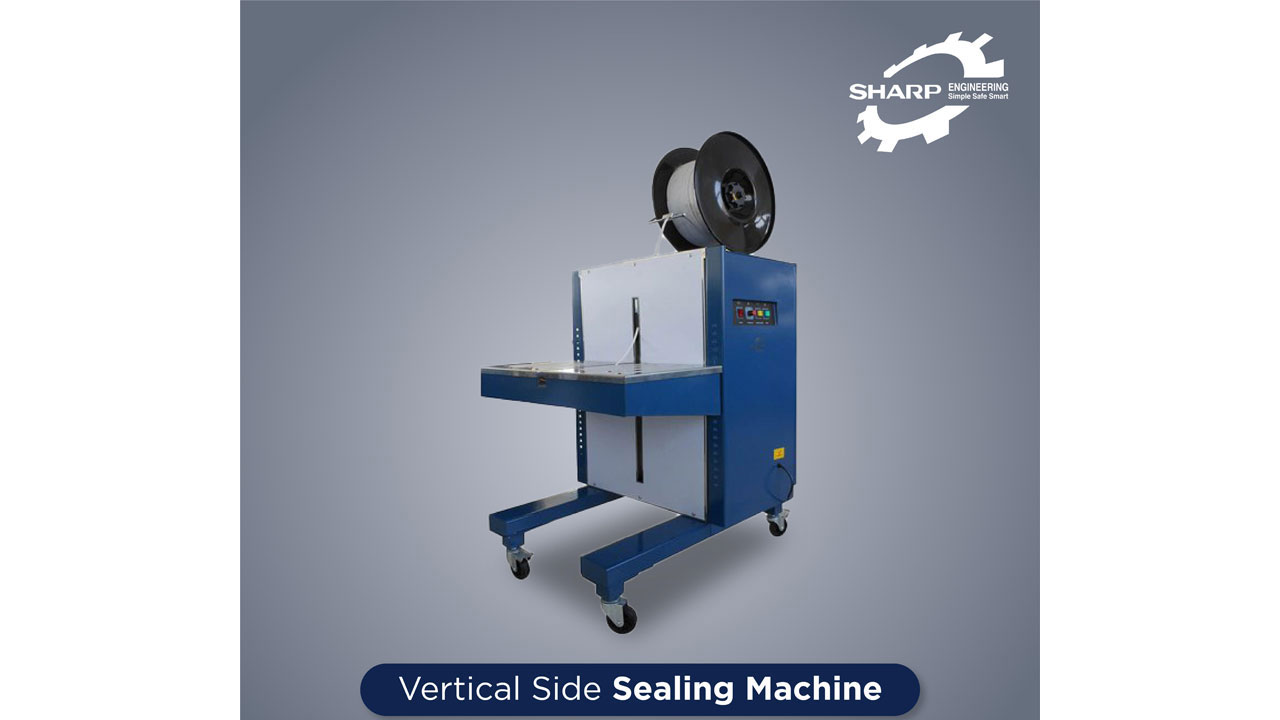
Sharp Engineering offers packaging machines for strapping, sealing, wrapping and shrink packing applications. Their product range includes fully auto strapping machines, semi auto strapping machines, strapping tools, PP strap rolls, carton sealer machines, bag sealing machines, shrink packing machines, L sealer machines and stretch wrapping machines. The company also offers material handling equipment and conveyor systems, which are important for reducing labour in product movement and dispatch operations. (Sharp Engineering India)
Why Labour Cost Increases in Packaging Operations
Packaging looks simple from outside, but inside a factory or warehouse it becomes a labour-heavy process.
A worker may need to fold cartons, apply tape, strap the carton, move the carton, stack it, wrap the pallet and shift the load to dispatch. If the product volume is low, this may be manageable. But once daily output increases, manual packaging becomes slow and costly.
Labour cost increases because workers are used for repeated tasks that machines can perform faster and more consistently.
Manual carton sealing requires time.
Manual strapping requires effort.
Manual pallet wrapping causes fatigue.
Manual product movement increases handling time.
Manual lifting increases safety risk.
Manual packing creates inconsistent output.
When these small delays happen throughout the day, the total productivity loss becomes high.
How Packaging Machines Reduce Labour Dependency
Packaging machines reduce labour dependency by automating repetitive tasks.
A carton sealer reduces manual taping.
A strapping machine reduces manual strap application.
A stretch wrapping machine reduces manual pallet wrapping.
A shrink packing machine reduces manual film packing.
A bag sealing machine improves bag closure speed.
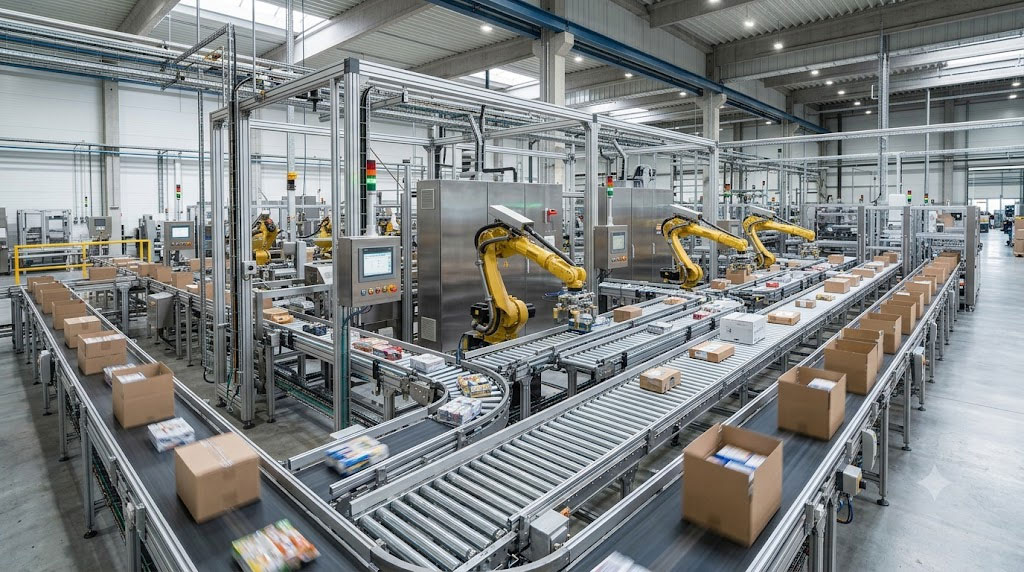
A conveyor reduces manual product movement.
A pallet truck or stacker reduces manual lifting and shifting.
The goal is not only to reduce the number of workers. The real goal is to use manpower more intelligently.
Instead of using workers for tiring repetitive jobs, the factory can use them for supervision, quality checking, material feeding, machine operation and dispatch coordination.
This improves both productivity and workplace efficiency.
Manual Packaging vs Machine Packaging
Manual packaging depends heavily on the speed, skill and energy level of the worker. During long working hours, output may reduce. Packing quality may also vary between operators.
Machine packaging gives more consistency.
A carton sealer applies tape in a more uniform way. A strapping machine applies controlled strap tension. A stretch wrapping machine gives more consistent film coverage around the pallet. A conveyor keeps goods moving between stations without constant lifting.
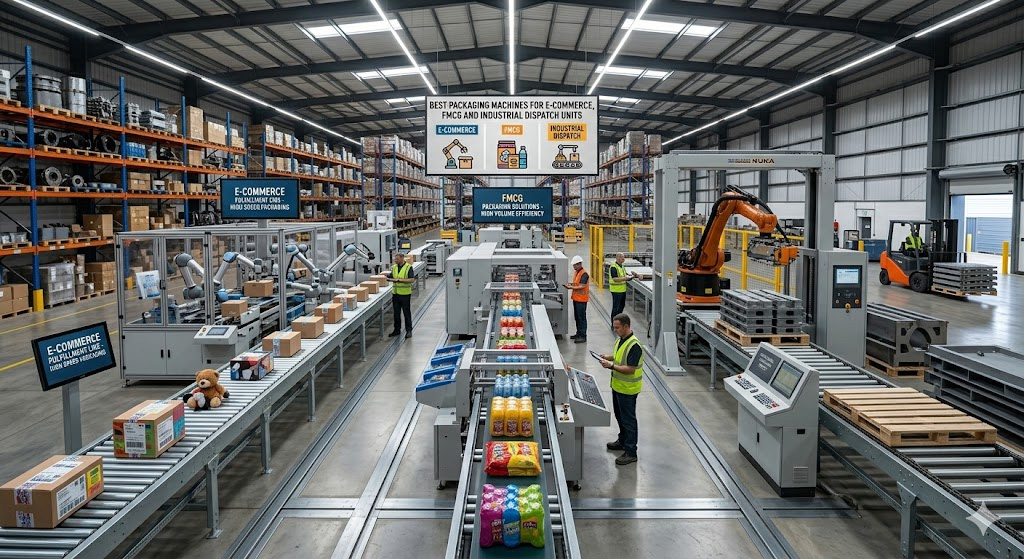
This difference becomes very important when the factory handles bulk orders, export dispatch, e-commerce orders, FMCG cartons or heavy industrial products.
Manual packaging may look cheaper in the beginning, but machine packaging often becomes more cost-effective when the business grows.
Carton Sealer Machines Reduce Manual Taping Labour
Manual carton taping is one of the most common labour-heavy packaging tasks.
In many factories, two or three workers may spend most of their time only folding and taping cartons. During peak dispatch, this creates delays because every carton must be sealed before it can move to strapping, stacking or shipping.
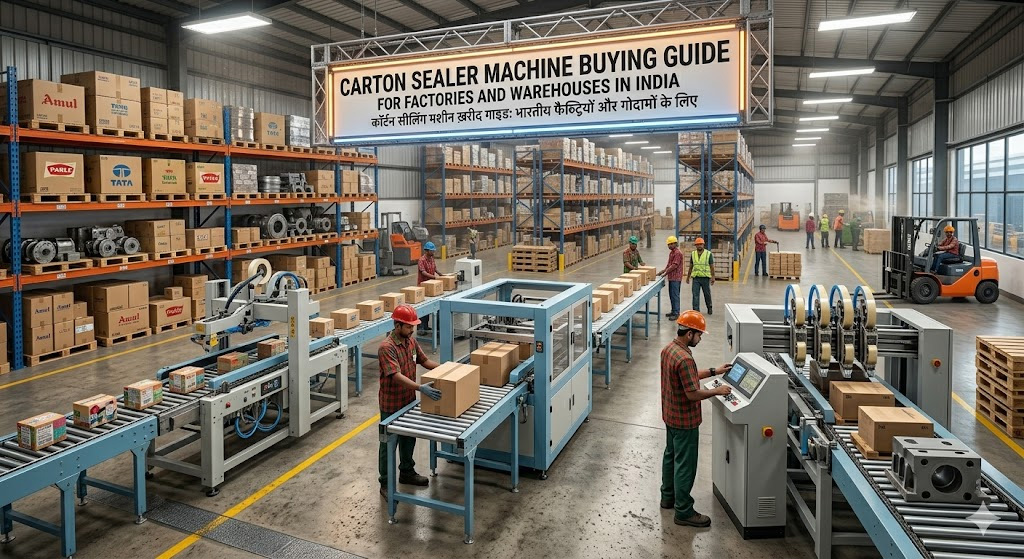
A carton sealer machine helps close and seal cartons faster and more consistently.
Sharp Engineering provides a wide range of carton sealer machines, including auto flap closer machines, random carton sealer machines, edge sealing machines, carton sealer machines for LED TV cartons, regular carton sealers, large carton sealers, small carton sealers and very small carton sealers. (Sharp Engineering India)
This range is useful because different industries handle different carton sizes. A food company may use regular cartons. An electronics company may require a special carton sealer for large or delicate cartons. An e-commerce warehouse may handle many carton sizes and may need an adjustable solution.
By using a carton sealer, the factory can reduce manual taping time, improve carton appearance and maintain better dispatch speed.
Strapping Machines Reduce Manual Strapping Effort
Manual strapping is slow and physically repetitive.
The operator must place the strap around the box, tighten it, seal it and cut it. If there are hundreds of boxes per day, this becomes tiring and inconsistent.
A strapping machine improves the process by applying strap faster and with better control.
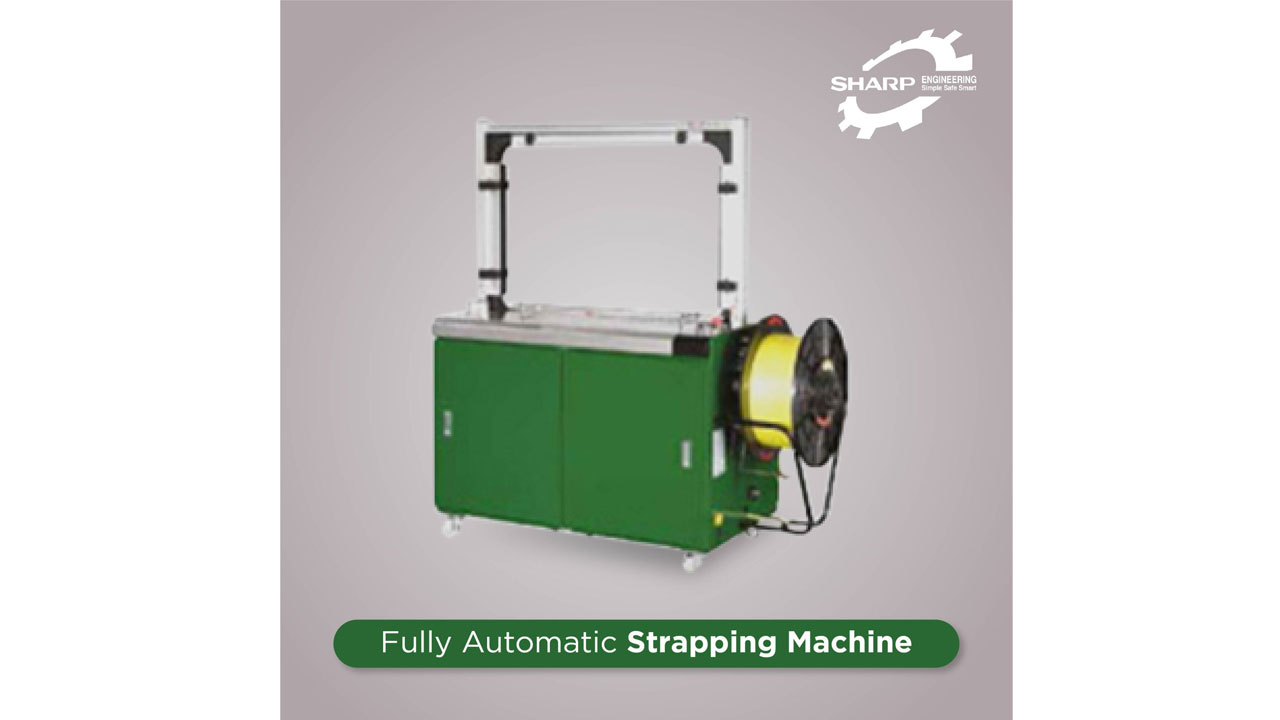
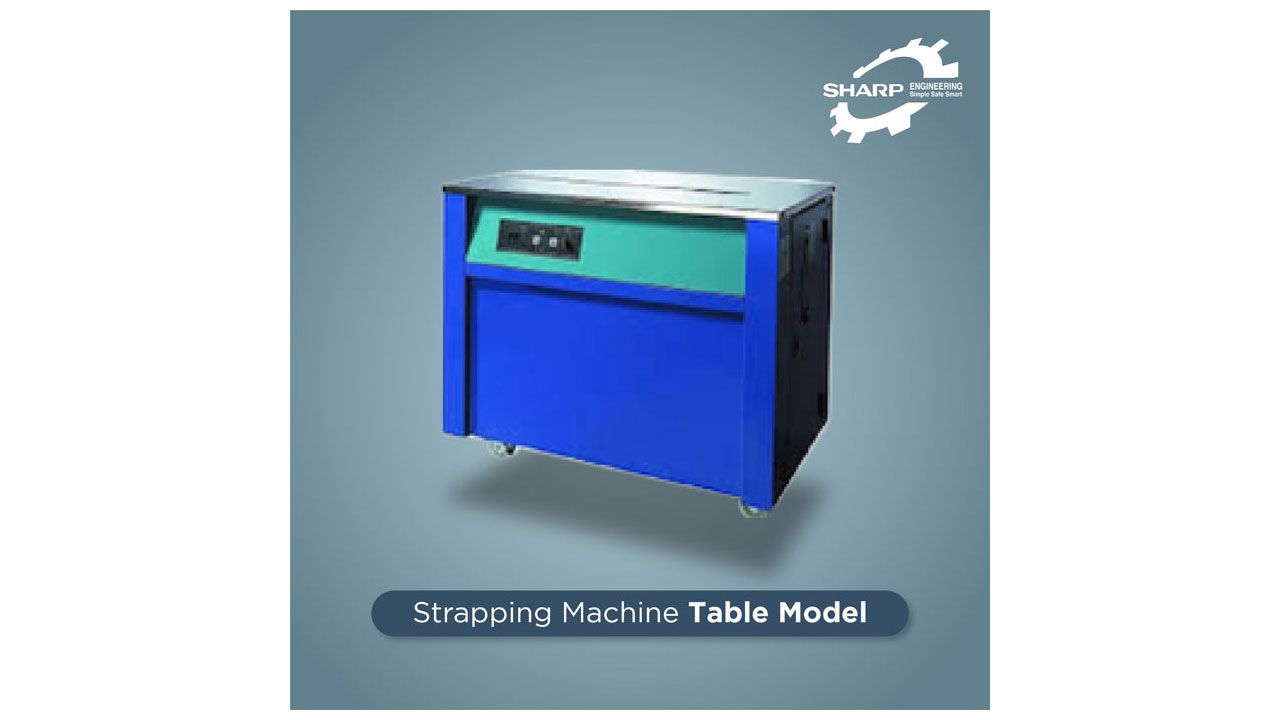
Sharp Engineering’s range includes fully automatic strapping machines, semi-automatic strapping machines and strapping hand tools for different packaging volumes. (Sharp Engineering India)
A semi-auto strapping machine is suitable for small and medium packaging operations where full automation is not required. A fully auto strapping machine is better for high-volume packaging lines where speed and lower operator involvement are important.
Sharp Engineering’s table model heavy-duty strapping machine page mentions that manual packaging and strapping can be cumbersome and time-consuming, while machine strapping improves speed, efficiency and accuracy. (Sharp Engineering India)
For factories packing cartons, bundles, boxes, books, industrial goods, electrical products or export shipments, strapping machines can reduce labour effort significantly.
Stretch Wrapping Machines Reduce Manual Pallet Wrapping Labour
Manual pallet wrapping is one of the most tiring packaging tasks in warehouses.
A worker has to move around the pallet multiple times while holding the stretch film roll. The process takes time, creates physical strain and may not give consistent wrapping quality.
A stretch wrapping machine automates this process.
Sharp Engineering offers stretch wrapping machines for carton boxes containing pharmaceutical products, light and heavy engineering goods, electrical and home appliances, tins containing fruit pulp, paint, liquids and lubricants. Their stretch wrapping range includes pallet stretch wrapping machines, roll stretch wrapping machines, box/carton wrapping machines, top press carton wrapping machines and luggage wrapping machines. (Sharp Engineering India)
For warehouses and export units, stretch wrapping machines help reduce manual effort while improving pallet stability.
This is especially useful where goods are moved by pallet truck, stacker or forklift and need stable wrapping before storage or transport.
Shrink Packing Machines Reduce Manual Film Packing
Shrink packing is used when products need protection, grouping or better appearance.
Manual film wrapping can be slow and uneven. Workers may use more film than required, and the final pack may not look clean.
A shrink packing machine improves film application and product presentation. It is useful for retail packs, bottles, boxes, gifts, confectionery, cosmetics and grouped products. Sharp Engineering offers shrink packing machines for packing goods with heat shrink films and highlights applications such as gifts, confectionery, bottles and cosmetics. (Sharp Engineering India)
For businesses where product appearance matters, shrink packing helps reduce manual handling and gives a cleaner final pack.
Bag Sealing Machines Reduce Repetitive Sealing Work
Many products are packed in bags instead of cartons. These may include powders, granules, food products, chemicals, spare parts, hardware, agricultural products and industrial materials.
Manual sealing of bags can be inconsistent. Weak sealing may cause leakage, spillage or product contamination.
A bag sealing machine helps close bags more reliably and quickly.
This reduces the need for workers to manually seal each bag and improves packing consistency. For companies handling large numbers of bags daily, this can save time and reduce packaging defects.
Conveyor Systems Reduce Manual Product Movement
In many factories, labour is not only used for sealing or strapping. A large amount of labour is used to move products between stations.
Workers lift cartons from packing tables to sealing areas. Then they move sealed cartons to strapping machines. After strapping, they carry them to stacking or dispatch areas.
This repeated movement wastes time and increases fatigue.
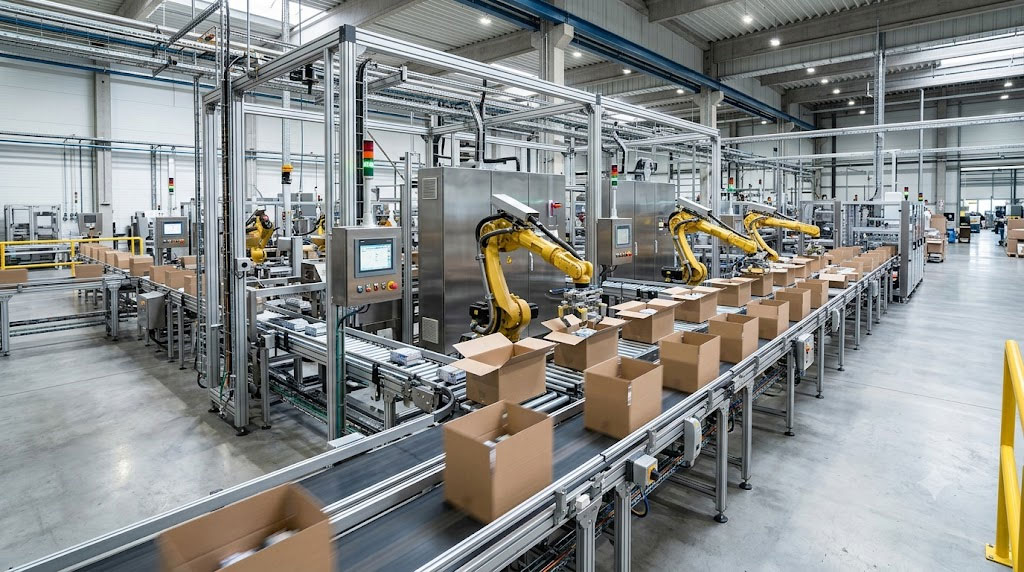
Conveyors solve this problem by keeping products moving through the line.
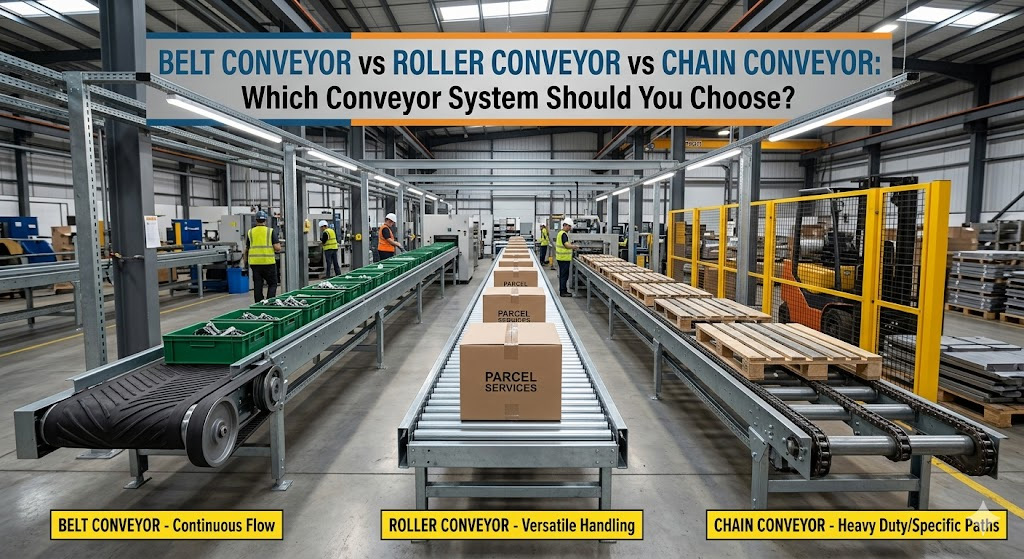
Sharp Engineering’s product range includes belt conveyors, chain conveyors and roller conveyors. Their conveyor options include horizontal conveyors, coding conveyors, inclined belt conveyors and truck loader conveyors. (Sharp Engineering India)
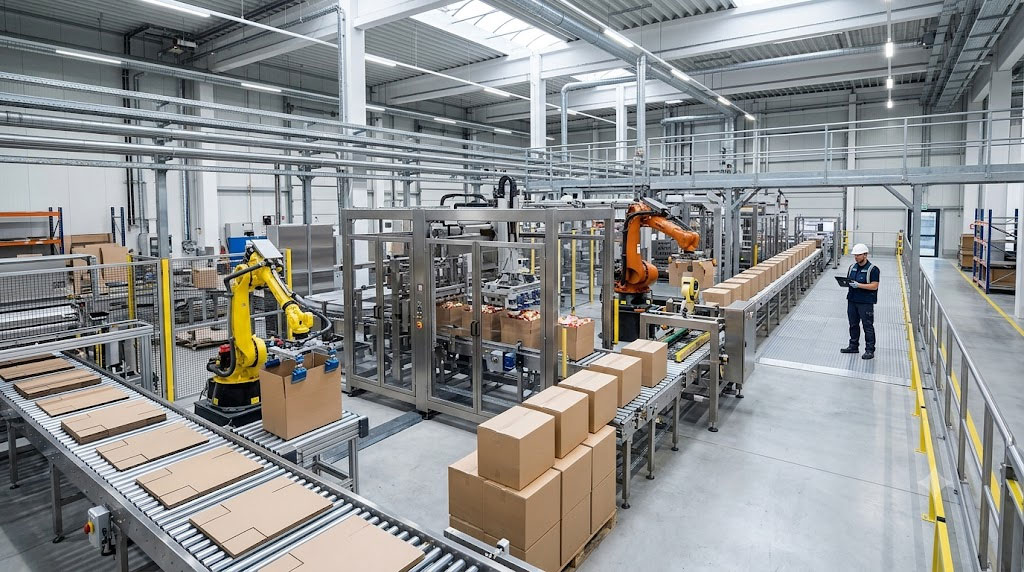
A conveyor system can connect packing, sealing, strapping, coding, inspection, wrapping and dispatch areas.
This reduces manual lifting and improves line flow.
Material Handling Equipment Reduces Lifting and Shifting Labour
After packaging, goods still need to be moved.
Packed cartons may need to be shifted to storage. Pallets may need to move to loading areas. Heavy goods may need lifting between floors. Industrial products may need stronger handling equipment.
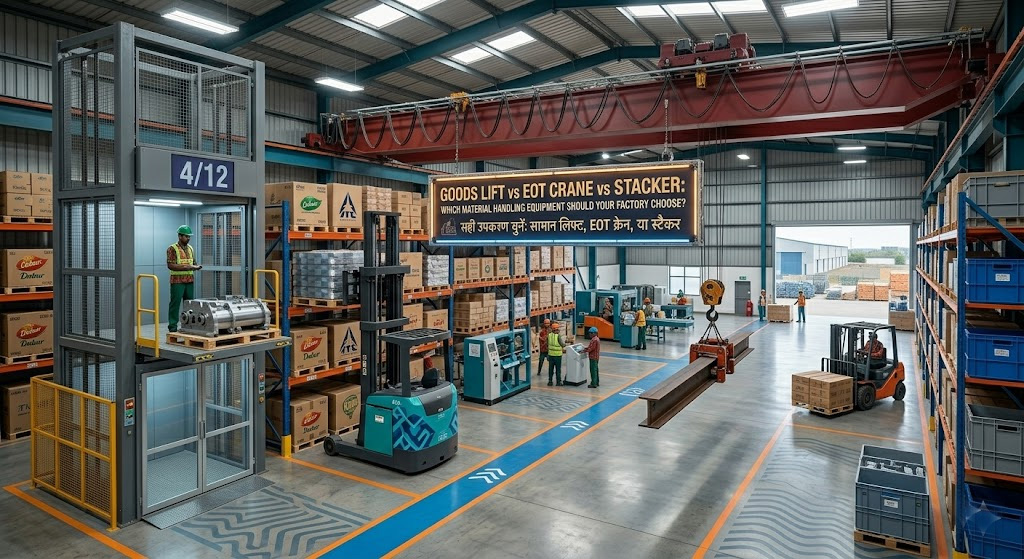
Sharp Engineering’s material handling range includes hand pallet trucks, stackers, trolleys, AGVs, goods lifts and EOT cranes. (Sharp Engineering India)
These machines reduce dependency on manual lifting and carrying.
A hand pallet truck helps one operator move palletised goods. A stacker helps lift and stack loads. A trolley helps move smaller packed goods. A goods lift helps move material between floors. An EOT crane supports heavier industrial handling.
When packaging machines and material handling equipment are planned together, labour savings become much stronger.
Where Factories Lose Labour Time in Packaging
Many factory owners do not realise how much time is lost in small manual actions.
Workers wait for cartons.
Cartons wait for taping.
Sealed cartons wait for strapping.
Strapped cartons wait for movement.
Pallets wait for wrapping.
Wrapped pallets wait for dispatch.
Each waiting stage adds cost.
Machines reduce this waiting time by making each step faster and more predictable.
A carton sealer speeds up box closing.
A strapping machine speeds up package securing.
A conveyor keeps cartons moving.
A stretch wrapping machine speeds up pallet preparation.
A pallet truck moves goods quickly to dispatch.
The result is a smoother workflow with less idle time.
Labour Saving Does Not Mean Only Reducing Headcount
Many businesses think labour saving means removing workers. That is not the only purpose.
In many growing factories, the issue is not excess labour. The issue is labour shortage, inconsistent output and dependence on manual skill.
Packaging machines help the same team handle more work.
Instead of hiring more workers during peak demand, the factory can increase output using machines.
Instead of using workers for tiring manual wrapping, they can operate machines and manage line quality.
Instead of depending on one skilled worker for strapping or sealing, the machine standardises the process.
This improves operational control.
How Packaging Machines Improve Productivity Per Worker
Productivity per worker means how much output each worker can support in a given time.
In manual packaging, one worker may seal limited cartons per hour. With a carton sealer, the same worker can process more cartons. With a strapping machine, the same operator can strap packages faster. With conveyors, the operator does not waste time carrying cartons between stations.
This means the factory gets higher output without increasing labour proportionately.
For example, a small packaging team using a carton sealer, semi-auto strapping machine and conveyor can often handle more output than a larger team working manually.
This is why packaging automation should be seen as a productivity investment.
How Packaging Machines Reduce Rework and Damage Cost
Labour cost is not only wages. Rework also costs money.
If cartons are taped poorly, workers may need to reseal them.
If straps are loose, packages may need to be strapped again.
If pallet wrapping is weak, loads may need rewrapping.
If products are damaged due to poor packaging, the cost becomes even higher.
Machines reduce these errors by giving more consistent results.
Carton sealers improve tape application.
Strapping machines improve strap tension.
Stretch wrapping machines improve pallet load stability.
Conveyors reduce rough manual handling.
Material handling equipment reduces lifting-related damage.
This helps reduce rework, wastage and complaints.
Packaging Machines for High-Volume Dispatch
High-volume dispatch requires consistency.
During peak orders, manual packaging teams often struggle to maintain speed. This can delay shipment schedules and create pressure on supervisors.
Packaging machines help maintain higher throughput.
For example:
Carton sealers support faster box closing.
Fully auto strapping machines support continuous strapping.
Stretch wrapping machines support faster pallet preparation.
Conveyors support smooth movement between stations.
Pallet trucks and stackers support faster internal logistics.
For e-commerce, FMCG, logistics, pharmaceuticals, engineering goods and export businesses, this can directly improve dispatch performance.
Packaging Machines for Export-Oriented Manufacturers
Export packaging needs better strength and consistency because goods travel longer distances.
A weak carton, loose strap or unstable pallet may create damage during road transport, warehouse handling, container loading or sea movement.
For exporters, labour saving is important, but packaging reliability is even more important.
A good machine setup can include carton sealing, strapping, stretch wrapping, conveyors and pallet handling equipment.
This helps the exporter prepare goods in a cleaner, safer and more professional way.
For global buyers, consistent packaging builds confidence in the supplier.
How to Calculate ROI of Packaging Machines
Before buying a packaging machine, buyers often ask: will this machine justify the investment?
A simple ROI calculation can be made by checking:
How many workers are currently involved in packaging?
How many hours are spent daily on sealing, strapping, wrapping and movement?
How many cartons or pallets are packed daily?
How much overtime is used during peak dispatch?
How often does rework happen?
How many products are damaged due to poor packing?
How much production waits because packaging is slow?
When these costs are added, the machine investment becomes easier to understand.
The ROI is not only labour saving. It also includes faster dispatch, lower damage, reduced rework, better consistency and improved capacity.
Which Packaging Machine Gives the Fastest Labour Saving?
The answer depends on the current bottleneck.
If most labour is used for manual taping, a carton sealer gives fast improvement.
If most labour is used for manual strapping, a strapping machine gives better savings.
If pallet wrapping is slow and tiring, a stretch wrapping machine gives strong benefit.
If workers are constantly moving cartons, conveyors give major productivity improvement.
If heavy loads are being lifted or shifted manually, pallet trucks, stackers or goods lifts may give the fastest operational improvement.
The right machine is the one that removes the biggest labour bottleneck.
Best Machine Combination for Labour Cost Reduction
For many factories, one machine alone may not solve the full labour problem.
A practical labour-saving packaging setup may include:
Carton sealer for box closing
Strapping machine for carton security
Conveyor for product movement
Stretch wrapping machine for pallet loads
Hand pallet truck for warehouse movement
Stacker for lifting and stacking
Goods lift for vertical movement
This combination reduces manual work at multiple stages.
It creates a smoother flow from packing to dispatch.
Industry-Wise Labour Saving Opportunities
FMCG Manufacturing Units
FMCG units usually handle high carton volumes. Labour is used heavily for sealing, moving and dispatching cartons.
Useful machines include carton sealers, shrink packing machines, strapping machines, conveyors and stretch wrapping machines.
E-Commerce and Logistics Warehouses
E-commerce warehouses need speed and accuracy. Manual carton sealing and movement can slow down the entire dispatch cycle.
Useful machines include carton sealers, roller conveyors, belt conveyors, strapping machines and pallet trucks.
Pharmaceutical Product Dispatch
Pharmaceutical products require clean and consistent packaging. Manual processes may create variation in carton sealing and handling.
Useful machines include carton sealers, shrink packing machines, stretch wrapping machines and conveyors.
Engineering Goods Manufacturers
Engineering products may be heavy and difficult to handle manually.
Useful machines include heavy-duty strapping machines, stretch wrapping machines, pallet trucks, stackers, goods lifts and EOT cranes.
Food and Beverage Units
Food and beverage plants need fast, safe and clean packaging.
Useful machines include bag sealing machines, shrink packing machines, carton sealers, conveyors and stretch wrapping machines.
Common Mistakes While Trying to Reduce Labour Cost
Many factories try to reduce labour cost by hiring lower-cost workers or increasing working hours. This may give short-term relief but does not solve the root problem.
The real issue is process inefficiency.
Another mistake is buying the cheapest machine without checking output capacity, carton size, load weight or service support.
A machine that is not suitable for the application may increase downtime instead of reducing labour cost.
Some factories also buy one machine without thinking about movement. For example, they buy a carton sealer but still manually carry cartons across the factory. This limits the benefit.
The best approach is to study the complete flow and then select the right machine combination.
What Details Should You Share Before Buying?
To recommend the right packaging machine, the supplier needs clear details.
Product type
Carton size
Package weight
Daily packaging volume
Current number of workers used
Current manual process
Packing material
Pallet size
Pallet load height
Factory layout
Dispatch method
Future production growth
These details help identify whether the buyer needs a carton sealer, strapping machine, stretch wrapping machine, conveyor, pallet truck, stacker or full line solution.
Why Choose Sharp Engineering
Sharp Engineering offers a broad range of packaging machines, material handling equipment and conveyor systems for industrial packaging and dispatch operations.
Their packaging machines are suitable for strapping, sealing, wrapping and shrink packing applications, and the machines are designed to improve efficiency, reduce labour costs and increase productivity. (Sharp Engineering India)
The product range covers packaging machines, material handling equipment, belt conveyors, chain conveyors and roller conveyors, allowing buyers to plan not only one machine but the complete packaging and movement process. (Sharp Engineering India)
For factories and warehouses looking to reduce labour cost, this complete range is useful because most labour loss happens across multiple stages, not only at one machine point.
Final Advice for Factory Owners and Purchase Teams
If your packaging team is always under pressure, adding more workers may not be the best long-term solution.
First, check where labour time is being wasted.
Is carton sealing slow?
Is strapping taking too much time?
Is pallet wrapping tiring and inconsistent?
Are workers carrying cartons manually?
Are heavy loads difficult to move?
Is dispatch delayed because packaging is not keeping pace with production?
Once the bottleneck is clear, the right machine can reduce labour dependency and improve output.
Packaging machines are not only for large factories. Even small and medium businesses can start with one machine and expand later.
Sharp Engineering can help factories choose suitable packaging machines, conveyors and material handling equipment based on product type, packaging volume, labour challenges and dispatch process.
Call to Action
Want to reduce labour cost in your packaging and dispatch area?
Share your product type, carton size, package weight, daily packing volume, current labour usage and factory layout with Sharp Engineering. The team can suggest the right combination of carton sealer, strapping machine, stretch wrapping machine, conveyor and material handling equipment for your operation.
FAQs
How do packaging machines reduce labour cost?
Packaging machines reduce labour cost by automating repetitive tasks such as carton sealing, strapping, wrapping, bag sealing and product movement.
Which packaging machine saves the most labour?
The best machine depends on your bottleneck. A carton sealer saves labour in taping, a strapping machine saves labour in securing packages, and a stretch wrapping machine saves labour in pallet wrapping.
Can a carton sealer reduce manual work?
Yes. A carton sealer reduces manual taping work and helps seal cartons faster and more consistently.
How does a strapping machine reduce labour effort?
A strapping machine applies strap around cartons or bundles faster than manual strapping and gives more consistent tension.
Is a stretch wrapping machine useful for labour saving?
Yes. A stretch wrapping machine reduces the need for workers to manually wrap pallets and improves load stability.
Are conveyors useful for reducing labour?
Yes. Conveyors reduce manual lifting and movement between packing, sealing, strapping, wrapping and dispatch stages.
Which machine is suitable for small factories?
Small factories can start with semi-auto strapping machines, carton sealers or bag sealing machines depending on their packaging process.
Which machine is suitable for high-volume factories?
High-volume factories may need fully auto strapping machines, carton sealers, conveyors and stretch wrapping machines.
Can packaging machines improve dispatch speed?
Yes. Packaging machines improve dispatch speed by reducing manual delays in sealing, strapping, wrapping and movement.
Do packaging machines reduce product damage?
Yes. Proper sealing, strapping, wrapping and material handling can reduce damage during storage, movement and transportation.
Are packaging machines useful for export packaging?
Yes. Export packaging benefits from stronger carton sealing, controlled strapping, stable pallet wrapping and better material movement.
Can one packaging machine reduce all labour cost?
Usually no. A complete labour-saving setup may require carton sealing, strapping, conveyors, stretch wrapping and material handling equipment.
How do I know which packaging machine my factory needs?
You should study your current packaging bottleneck, product size, carton weight, daily volume, labour usage and dispatch method.
Is packaging automation expensive?
The cost depends on the machine type and automation level. However, the long-term savings can come from reduced labour dependency, faster dispatch and fewer packing errors.
Why choose Sharp Engineering for packaging machines?
Sharp Engineering offers packaging machines, conveyor systems and material handling equipment, making it suitable for factories looking to reduce labour cost and improve dispatch productivity.